
The Montessori philosophy of education was developed in 1907 by Dr. Maria Montessori, Italy’s first female physician. It is a child-centered approach which encourages creativity, curiosity and critical thinking.
Dr. Montessori observed that children’s minds are absorbent like a sponge. An example of this concept is that children learn to speak their first language fluently without formal instruction – learning grammar, syntax and context – but absorb it through exposure in their environment. She recognized that in the first six years of life children absorb specific things at specific times, and called these periods the Sensitive Periods. In these Sensitive Periods the child has a window of opportunity to learn specific concepts, and they are intrinsically drawn to experiences and activities that will develop these concepts or skills. A child who misses this window of opportunity will not be able to reclaim it. Therefore, a child’s learning environment must be carefully thought and prepared in order to satisfy each child’s sensitive period for learning.
Montessori educators act as guides, preparing a learning environment where children are free to explore areas of interest and develop skills at their own pace. Every child is on their own learning path and, in essence, has their own curriculum. Dr. Montessori recognized that children learn through their senses and by exploring their physical environment. She developed her own set of learning materials – many of which are self-correcting – for the child to manipulate and internalize concepts with ease. These materials are used in Montessori classrooms worldwide, facilitated by specially trained Montessori educators.
“Our aim is not merely to make children understand, and still less to force them to memorize, but so to touch their imaginations as to enthuse them to their innermost core.” – Maria Montessori
The Prepared Learning Environment
Dr. Montessori was the first to introduce child-sized furniture to children – a practice that is now used in preschools all over the world. The Montessori learning environnment is carefully prepared by our Montessori Master Educators and is ever-evolving to meet the developmental needs of the children in the program. It consists of six learning areas:
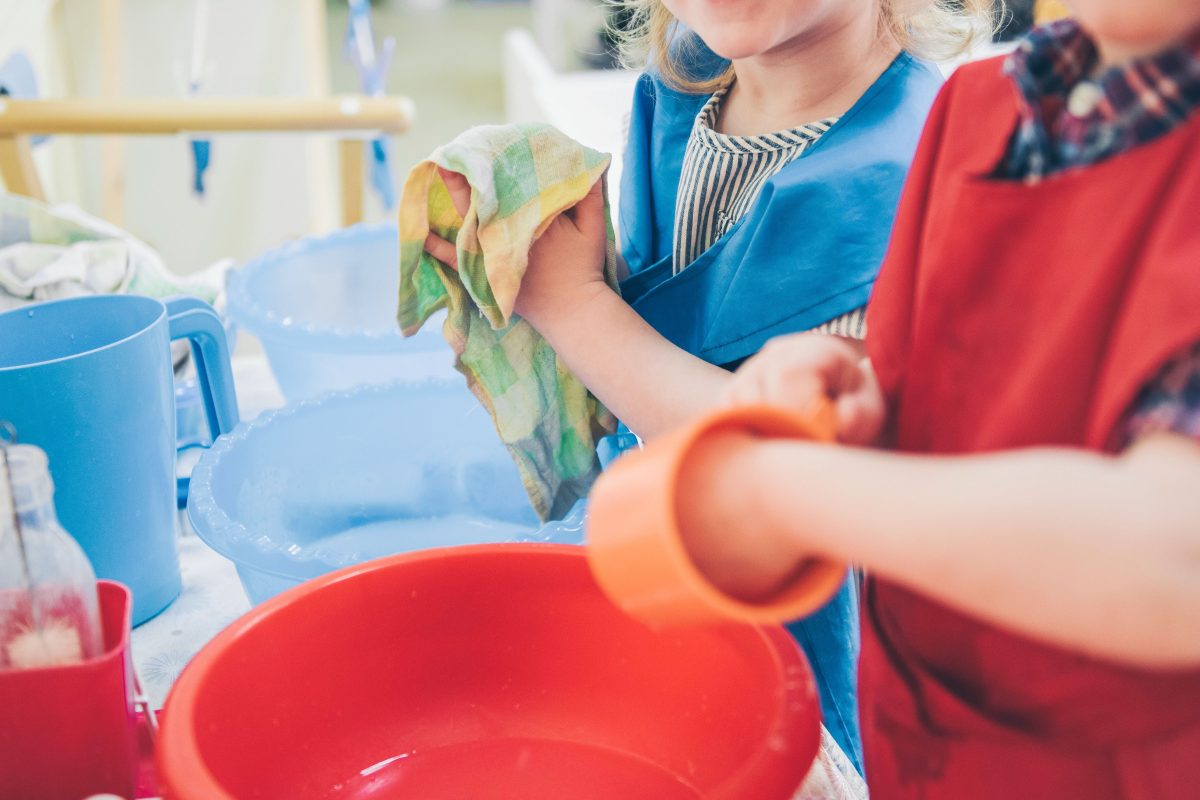
Exercises of Practical Life
Dr. Montessori observed that even when children were presented with toys, their attention gravitated toward the use of everyday objects and activities that they see adults carrying out daily. The Exercises of Practical Life help to develop skills towards independence in daily living and positive self-concept.
“Never help a child with a task at which he feels he can succeed.” – Maria Montessori
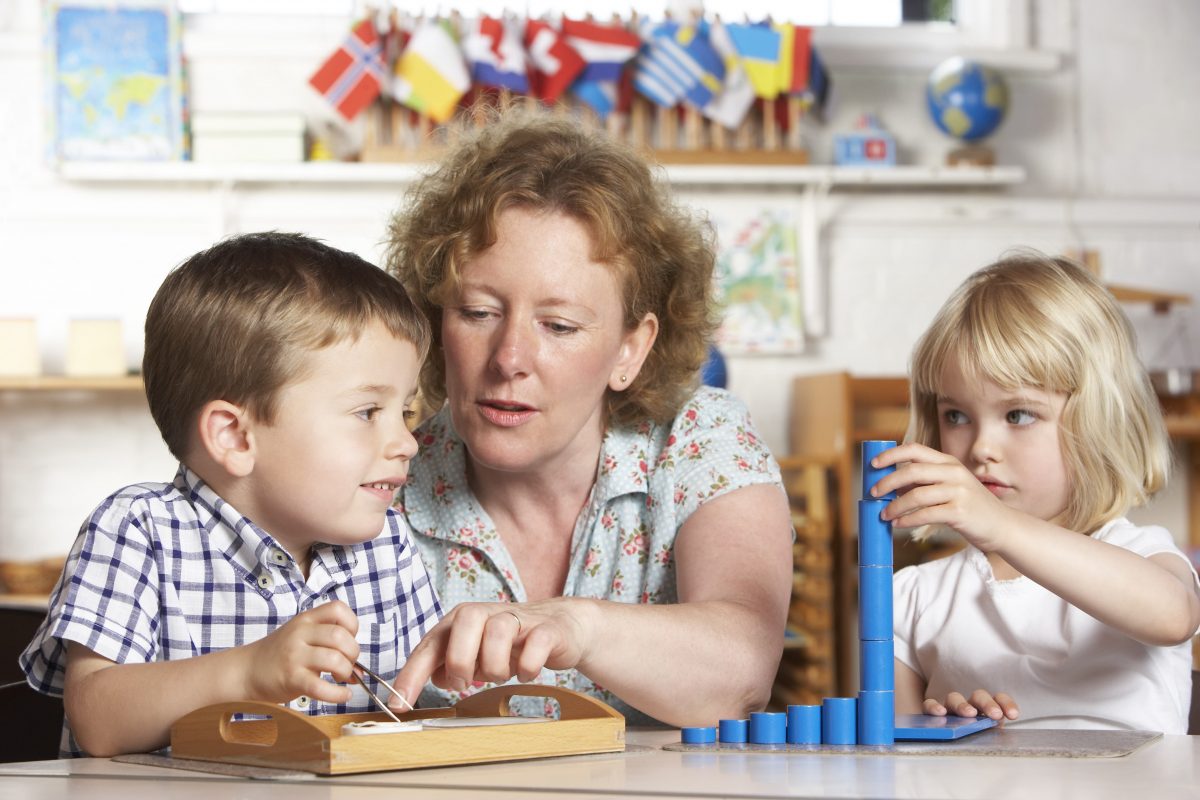
Education of the Senses
Dr. Montessori categorized the sensorial exercises into eight groups: Visual, Tactile, Baric, Thermic, Auditory, Olfactory, Gustatory and Stereognostic. Through the use of Sensorial materials children learn to classify things around them by texture, shape, size, colour, loudness, softness, weight and temperature. Senses are exercised in isolation by use of blindfold or closing their eyes. Sensory impressions and muscular memory are developed through these, and other activities/experiences in both the indoor and outdoor learning environments. Many of the Sensorial materials are mathematical in nature and are indirectly preparing children for learning in mathematics – such as geometry, size and volume, and the binomial algebraic formula.

Language
Montessori Language exercises help to build vocabulary, internalize the formation of lower-case letters through use of their tactile sense, phonological awareness, build words using a moveable wooden alphabet, and finally writing with a pencil and reading. Practical Life exercises indirectly prepare the child for writing – strengthening their pincer grasp for later pencil grip, and developing muscular memory in later letter formation.
Mathematics
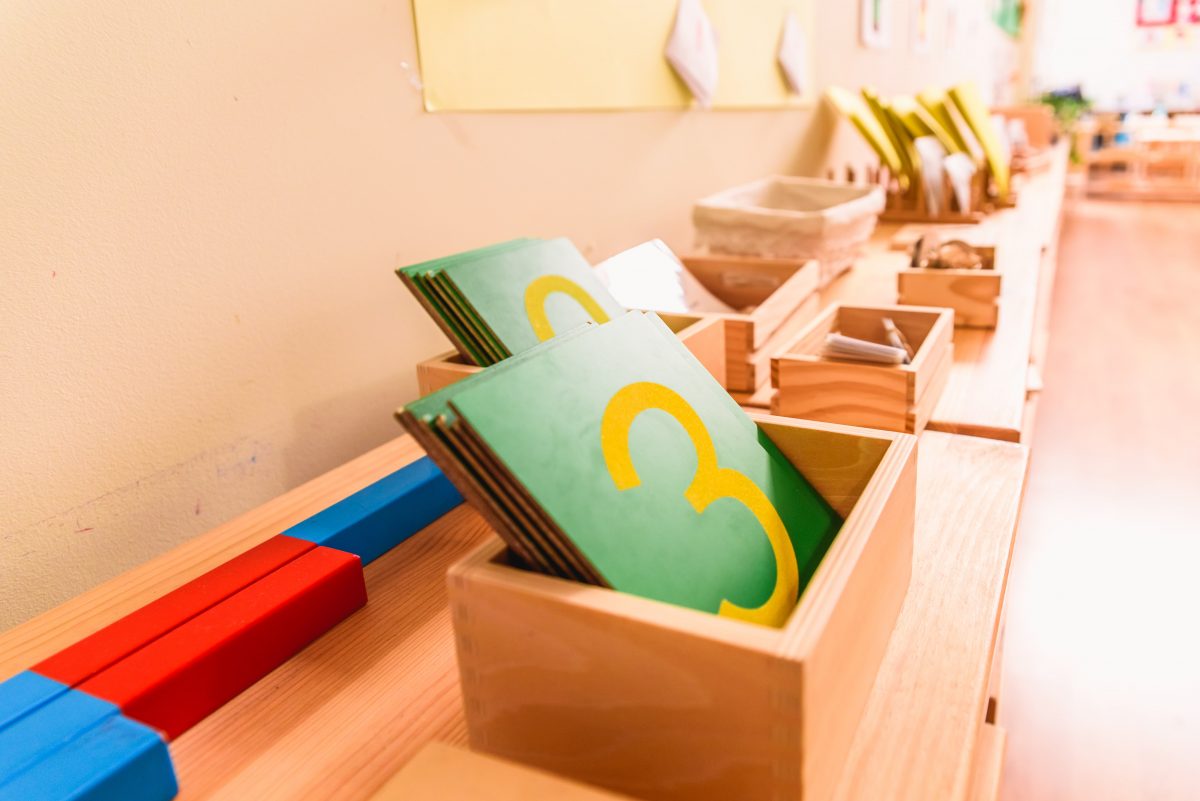
Mathematical exercises introduce children to numeracy concepts such as sequence, patterns and relationships, cardinality, one to one correspondence, odd and even, the decimal system, and matching quantity and symbol through concrete methods. Eventually the child will explore fractions, addition, subtraction, multiplication and division through the use of self-correcting didactic materials.
Geography & Culture
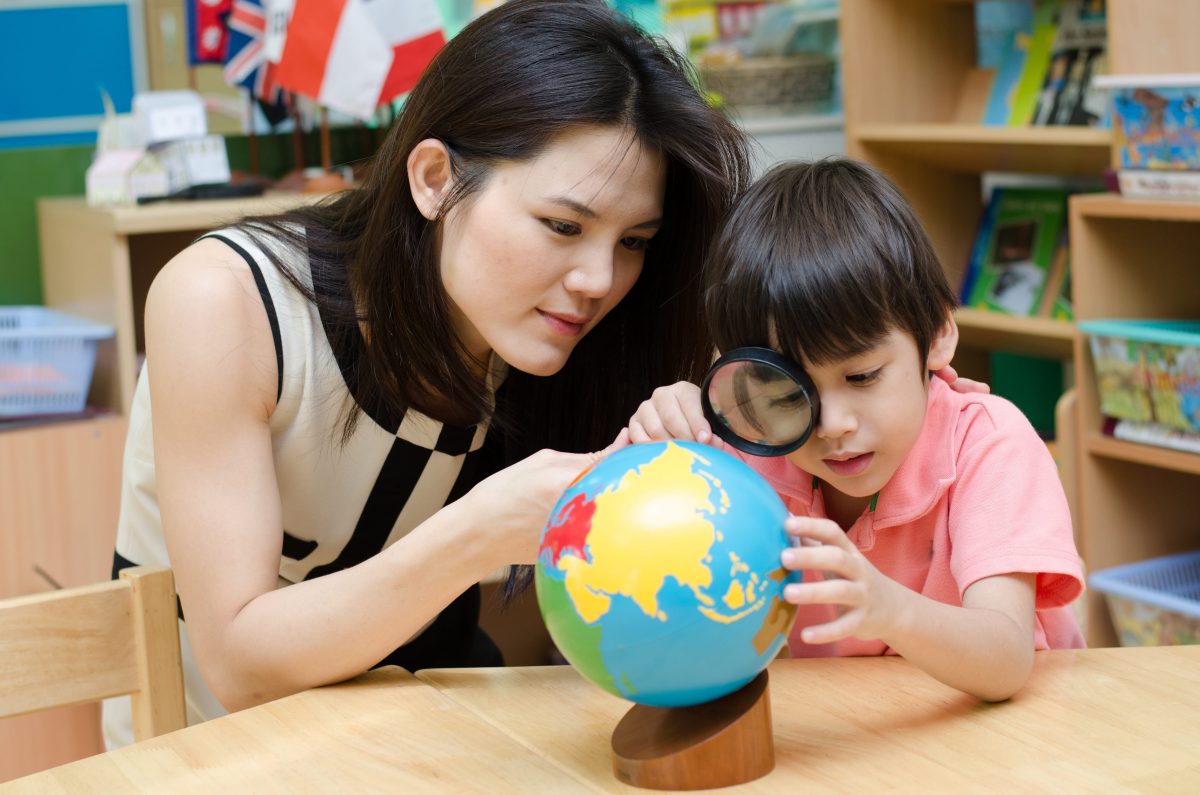
Through exercises of Geography and Culture the child learns about themselves in relation to the world. Children learn about the earth and space, the elements, and about countries, rituals, celebrations, music, art, food and language. At River Heights Early Learning Centre families are encouraged to participate in our cultural explorations by lending your time and/or your family’s own cultural artifacts to help us learn about and celebrate each other.
Science
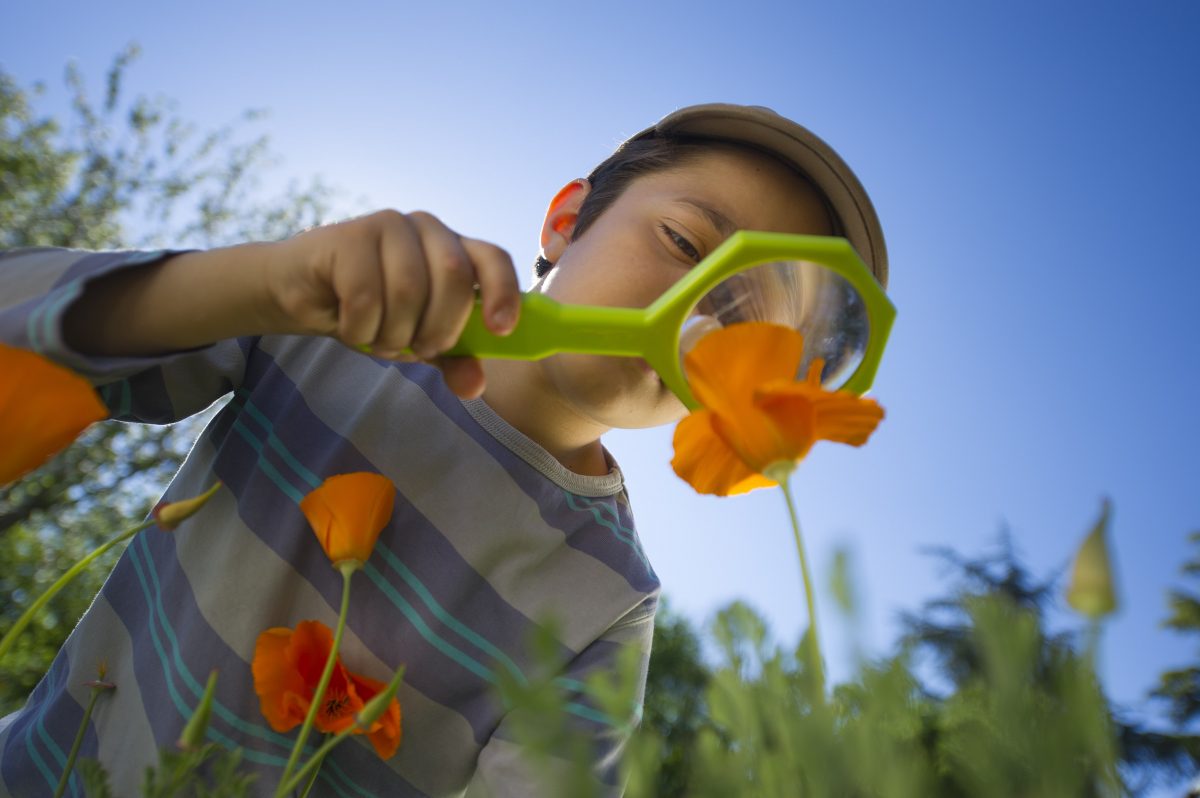
Dr. Montessori believed that children are scientists wanting to explore and learn everything about their world. Exercises in zoology, botany and physics provoke children to ask questions and conduct experiments; encouraging a sense of wonder at the grandeur of the universe, and the miracle of life in nurturing a plant’s growth from a seed.
“The land is where our roots are. The children must be taught to feel and live in harmony with the earth.”
– Maria Montessori